
Is HeyTea Actually Healthy?
HeyTea built its name on drinks that look like desserts: cheese foam, brown sugar pearls, fruit teas in jewel colors. Which raises the fair question this page answers honestly — is any of it actually healthy, or is it just well-dressed sugar?
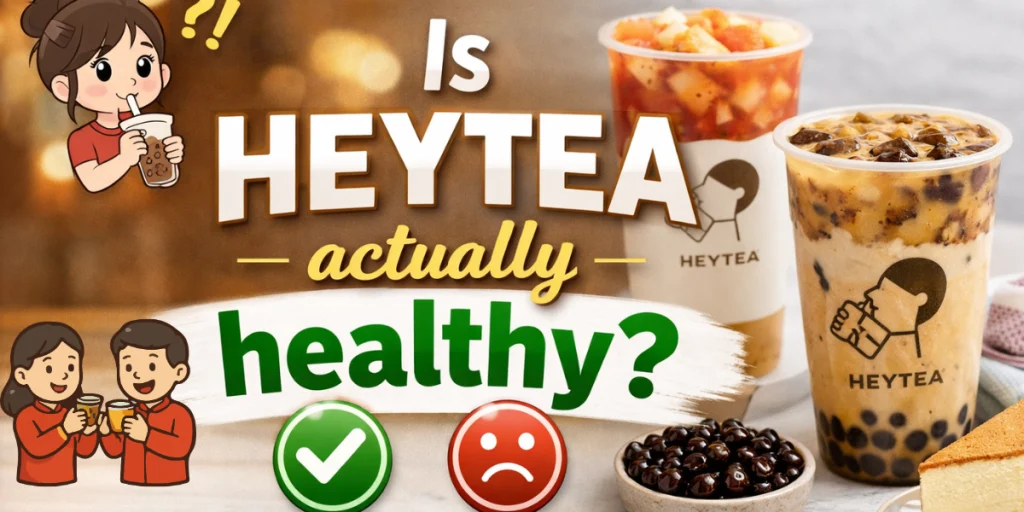
The honest answer is: it depends on the build, and the build is mostly yours. HeyTea publishes its nutrition numbers — calories, sugar and caffeine by drink — and the range is enormous: the same menu holds a 140-calorie lemon green tea and a 350-calorie cheese tea. Health, at HeyTea, is an ordering decision.
The Menu, in Health Terms
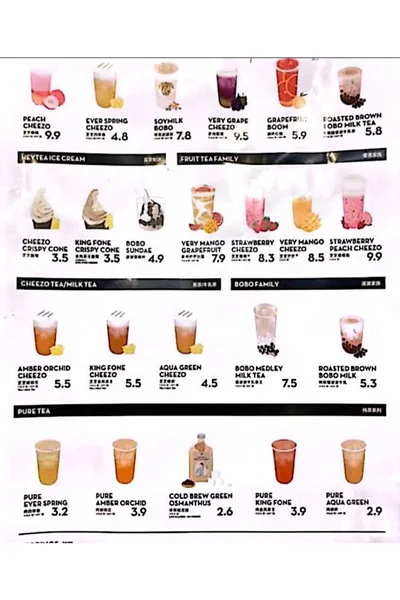
The menu splits into families with very different profiles: pure teas (near zero), fruit teas (light to moderate), milk teas (creamy, mid-to-rich), cheese teas (the richest), and seasonal builds in between. Knowing which family you are in matters more than which drink you pick inside it.
What the lighter families have going for them is real: fresh fruit brings vitamins and natural sweetness, and matcha brings caffeine with L-theanine — the combination behind its reputation for calm focus rather than a coffee-style jolt.
Sugar: Where the Damage Is
Sugar is the main event. Milk teas and fruit teas are sweetened to order, and the sugar is most of the calorie story in both — the tea underneath contributes almost nothing.
The numbers: a brown sugar pearl milk tea carries roughly 30 to 50 grams of sugar depending on size and level; at full sugar the pearls alone can add about 25 grams; and a classic milk tea at 36 grams is, in kitchen terms, about 9 teaspoons of sugar in one cup.
None of that is an emergency once — it is a habit question. Very sweet drinks taken daily are the pattern linked to weight gain, cavities and type 2 diabetes risk. Taken weekly, at half sugar, the same drink is a different nutritional object entirely.
Cheese Foam and Dairy: Nutritional Balance vs. Calories
Cheese foam is HeyTea‘s signature: a salted, whipped cheese cap over brewed tea, and the reason a cheese tea feels like a dessert course. It is not empty calories — the cap brings a little protein and calcium, and real satiety — which is exactly why it should be counted as food, not as a drink garnish.

The cost side: cream cheese, milk and sugar in the cap push a cheese tea to the top of the calorie tables — around 320 to 350 kcal for the rich builds on the nutrition page. If you are managing weight or fat intake, cheese foam is the topping to make occasional, not daily.
Tea Base: Antioxidants and Energy
Underneath everything sits actual tea — green, black, oolong, jasmine — and tea is the genuinely healthy part of the cup: rich in catechin antioxidants, the compounds linked to heart health and lower inflammation. A HeyTea drink is never just its toppings; the base is doing quiet good.
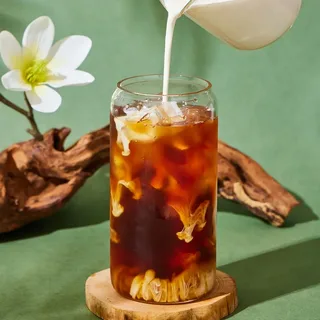
Matcha is the concentrated case: because you consume the whole ground leaf, not an infusion, its antioxidant and nutrient levels run higher than brewed tea’s. The trade-off is caffeine — matcha carries a real dose, and the caffeine-sensitive should treat a matcha latte like a coffee, not a soft drink.
Customization: The Health Lever
HeyTea’s healthiest feature is not an ingredient — it is the order screen. Sugar level, ice, size and toppings are all adjustable, which means the same drink name can be a 140-calorie refresher or a 350-calorie dessert depending on three taps.
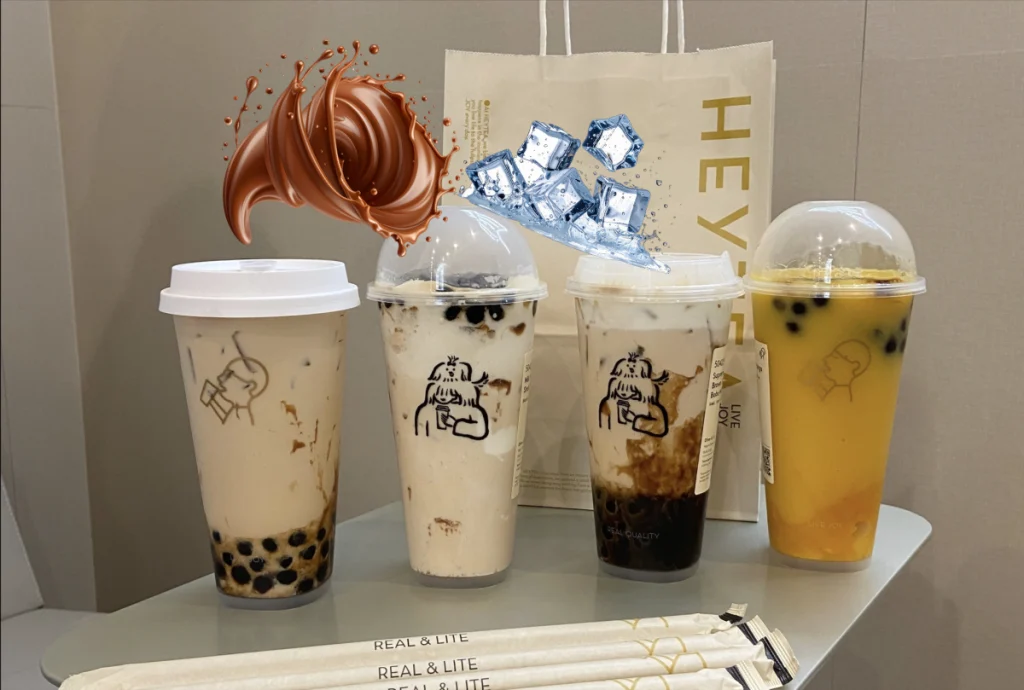
The moves regulars make: sugar at half or less, low-fat milk where it is offered, fruit tea instead of milk tea on ordinary days, and toppings treated as the main event only when the drink is the treat.
None of this requires giving anything up. It is the difference between HeyTea as a daily habit with daily numbers, and HeyTea as a daily habit with numbers you chose on purpose.
HeyTea vs. the Alternatives
Against soda and mass-produced bubble tea, HeyTea starts ahead: real brewed tea, real fruit, fresh milk — ingredients with nutritional value, not just flavoring. A customized HeyTea is one of the better flavored drinks you can buy.
But the comparison that matters is the honest one: against plain tea or water, even a light HeyTea carries sugar they don’t. HeyTea wins against other treats. It does not beat the drinks that were never treats.
So, Is HeyTea Healthy?
It depends on what ‘healthy’ is being asked to mean.
For ingredients: yes, comparatively — real tea’s antioxidants, real fruit’s vitamins, and none of the fully artificial profile of a soda.
For numbers: only if you order it that way. Full sugar plus toppings can push a cup past dessert territory — the nutrition tables top out around 320 to 350 kcal — while a half-sugar fruit tea sits comfortably in snack range.
The verdict: HeyTea is a treat with unusually good raw materials and unusually honest controls. Enjoyed with the controls used, it fits a healthy lifestyle. Ordered on autopilot at full everything, it is dessert in a tea cup — a good one, but dessert.
Tips for Enjoying HEYTEA
The Bottom Line
HeyTea is not a health drink, and it is not junk either. It is real tea, real fruit and real milk, sweetened to a level you choose, topped as heavily as you allow. Choose the lower sugar, skip the heavy cap most days, and the drink in your hand is a reasonable pleasure. Choose everything at full, and it is a dessert — also reasonable, as long as you knew. That is the whole answer.