
Heytea Matcha Jelly: Taste, Calories, and How It Compares to Boba
Ever noticed the small green jelly cubes floating in some Heytea drinks and wondered what they actually are? That is Matcha Jelly, one of the more understated toppings on the menu, and it has slowly built its own following among people who want the tea flavor of matcha without turning the whole drink into a matcha latte. Here is what it is made of, how it tastes, what it costs, and which drinks it actually works best in.
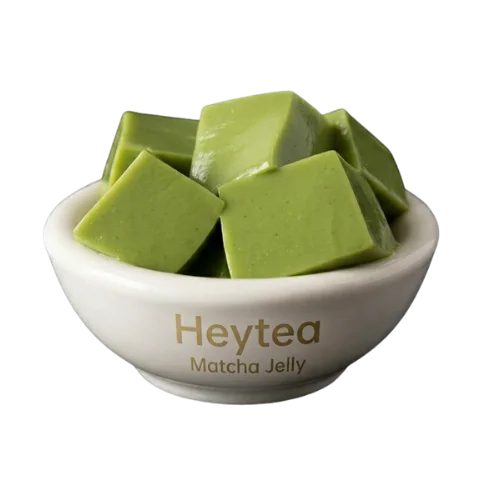
What Is Heytea Matcha Jelly?
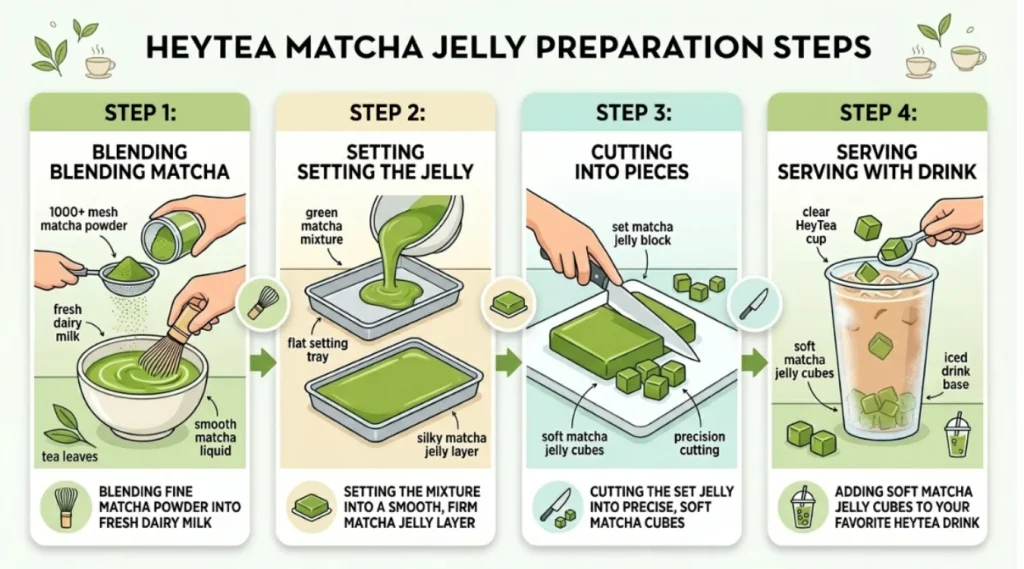
Matcha Jelly is a soft, slightly firm jelly topping made using Heytea’s premium 1000 Mesh Plus matcha powder. Instead of blending the matcha into the drink itself, the tea is set into small jelly cubes, giving you bursts of matcha flavor and a light, clean bitterness in every few sips rather than one consistent matcha taste throughout the whole cup.
Because it is made fresh daily from real matcha rather than a syrup or flavoring, the flavor comes through as more earthy and grassy than sweet, which is part of why it is popular with people who find some of the sweeter cheese foam or brown sugar toppings a bit much.
Matcha Jelly Calories and Price
Pricing and calorie counts for Matcha Jelly vary a bit depending on the source and location, so treat these as a general range rather than a fixed number. Some menu trackers list it as low as 25 calories at $0.49, while others place it closer to 120 calories at $0.99, likely reflecting different serving sizes or recipe updates over time. Either way, it lands on the lighter end of the topping lineup compared to cheese foam or brown sugar boba, and it is worth confirming the exact number in the Heytea app for your specific location before ordering.
Matcha Jelly vs Boba: What Is the Actual Difference
The two toppings serve different purposes, even though people sometimes lump them together as just add ons.
Texture: Boba, whether tapioca or brown sugar, is round, dense, and chewy, built to be sipped up through a wide straw. Matcha Jelly is softer and cuts more easily, closer to the texture of a firm gelatin cube than a chewy pearl.
Flavor: Classic boba is usually sweet, sometimes caramel like in the case of brown sugar pearls, and mostly neutral in flavor otherwise. Matcha Jelly actually carries its own distinct taste, earthy and green tea forward, which changes the character of the drink rather than just adding texture.
Calories: Regular boba, especially brown sugar boba, tends to run higher in calories due to the syrup it is cooked in. Matcha Jelly, made primarily from brewed tea, generally comes in lighter, though as noted above the exact number can vary by source.
Best use case: Boba fits almost any drink on the menu, from milk teas to fruit teas. Matcha Jelly is best suited to drinks that already lean toward a tea forward or matcha flavor profile, since it reinforces that taste instead of contrasting against it.
Best Drinks to Add Matcha Jelly To
Matcha Jelly works best layered into drinks that already share its flavor direction rather than being dropped into something fruity or dessert like.
Cloud Matcha Latte: A lighter, creamier matcha drink where the jelly adds texture without competing against the milk-based matcha flavor already in the cup.
Supreme Matcha Latte or Triple Supreme Matcha Latte: For matcha purists, adding the jelly on top of an already matcha-forward drink intensifies the earthy flavor rather than diluting it.
Iced Matcha Tea without Milk: One of the lightest drinks on the whole menu, and a natural pairing since both the base and the topping share the same clean, grassy matcha character.
Longjing or green tea-based drinks: Even outside the matcha-specific line, Matcha Jelly can work well in other green tea drinks for people who want a stronger tea presence without switching the whole base.
It is generally not recommended for fruit teas or brown sugar milk teas, since the earthy matcha flavor tends to clash with fruit forward or caramel style profiles rather than complementing them.
Frequently Asked Questions
Is Matcha Jelly the same as boba?
No. Boba is a chewy pearl, usually tapioca based and cooked in sugar syrup. Matcha Jelly is a softer, cube shaped topping made from real brewed matcha, with a different texture and a distinct tea flavor rather than a neutral, sweet one.
Does Matcha Jelly contain dairy?
The jelly itself is generally dairy free, since it is made from matcha and a setting agent rather than milk. Always double check with the specific location, since recipes and cross contact can vary by store.
Is Matcha Jelly a low calorie topping?
It sits on the lighter end compared to cheese foam or brown sugar boba, though exact calorie counts vary by source and possibly by location, so it is worth checking current nutrition information in the app if you are tracking calories closely.
Can I add Matcha Jelly to any drink?
You can technically request it on most drinks, but it works best flavor wise in matcha or green tea based drinks. Adding it to a fruity or brown sugar drink is possible, but the earthy matcha taste may not blend as smoothly with those flavor profiles.
What does Matcha Jelly taste like on its own?
Earthy, slightly bitter, and grassy, similar to drinking a strong cup of matcha, just in a firmer, jelly like form instead of liquid.
Final Thoughts
Matcha Jelly is one of those toppings that rewards people who already like real matcha rather than the sweeter, milkier versions of it. If you are someone who orders the Cloud Matcha Latte or a straight Iced Matcha Tea, adding this topping gives you more of what you already like about the drink instead of pulling it in a different direction. Skip it on the fruity or dessert style drinks, and save it for the matcha lineup where it actually belongs.


