How Much Caffeine Is in a Cup of Coffee?
Coffee is one of the world’s most popular drinks, and for many people it is part of their daily routine. The boost you feel after drinking coffee comes from caffeine, a natural stimulant that helps improve alertness and reduce tiredness.
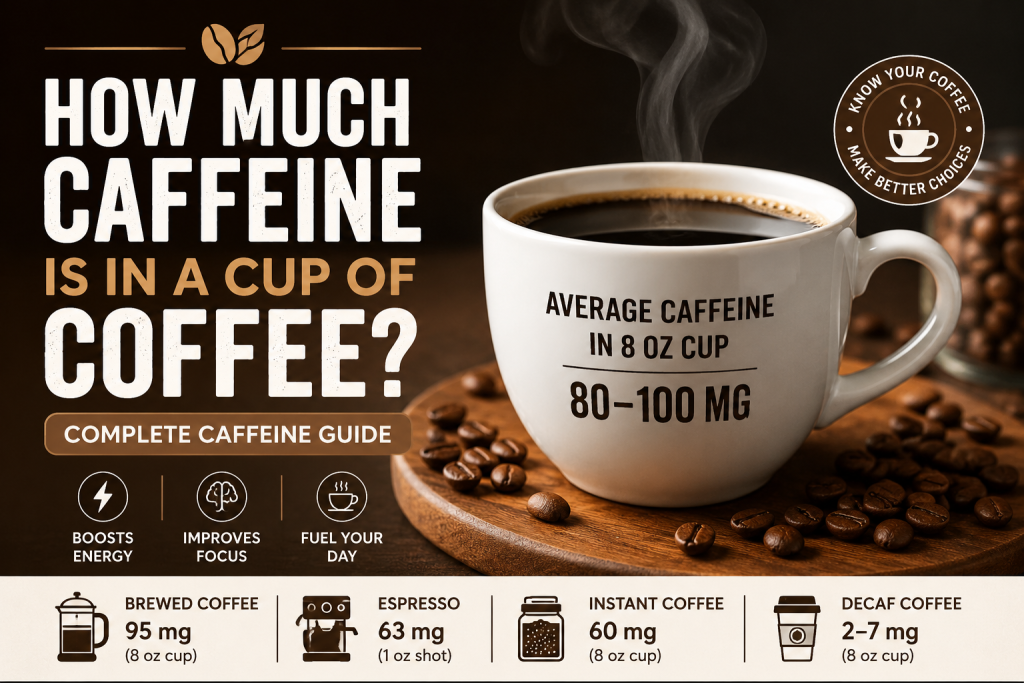
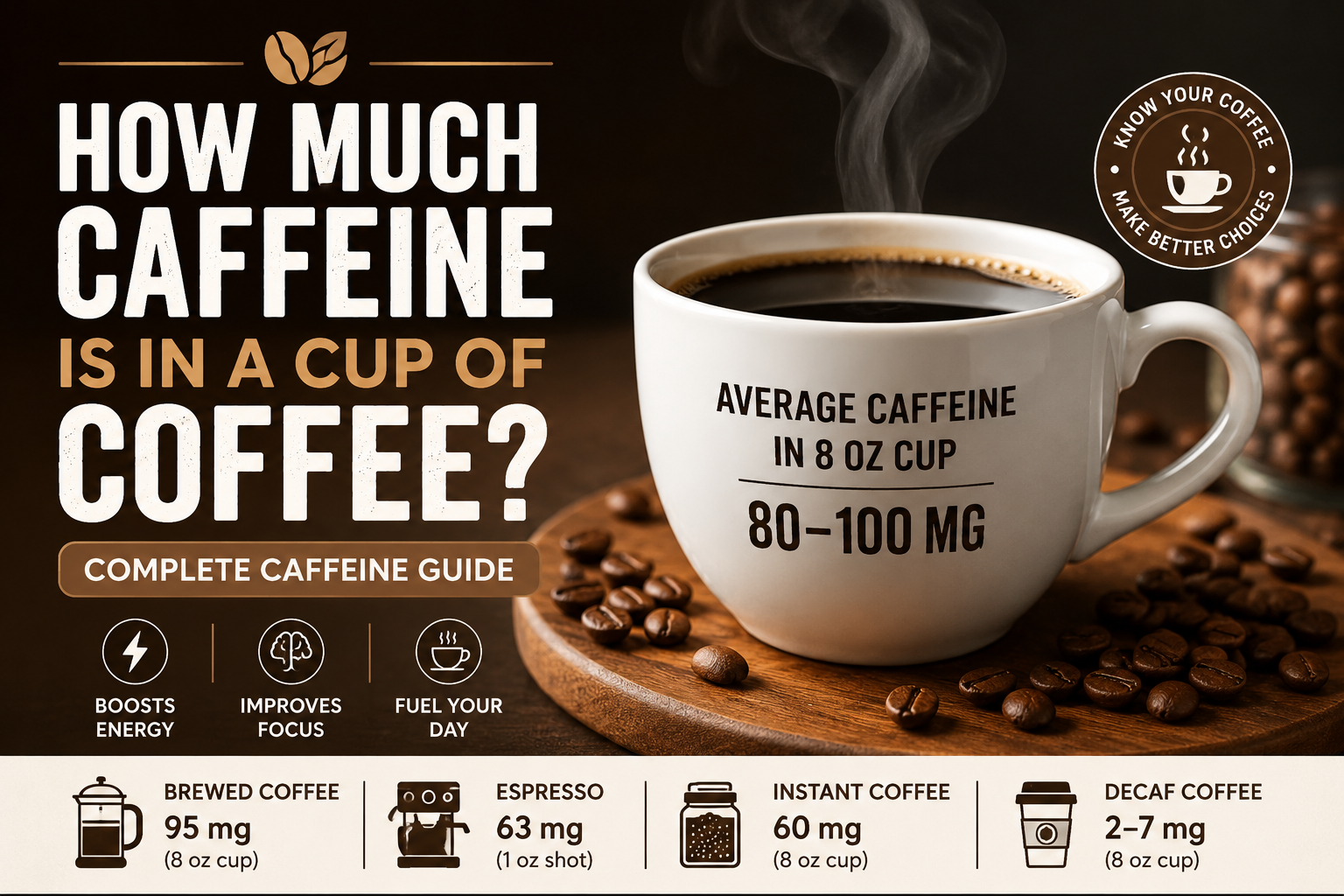
A standard 8-ounce (240 ml) cup of brewed coffee contains about 95 mg of caffeine on average. However, the exact amount is not always the same. It depends on the coffee beans, brewing method, serving size, and how strong the coffee is prepared.
Average Caffeine in Different Types of Coffee
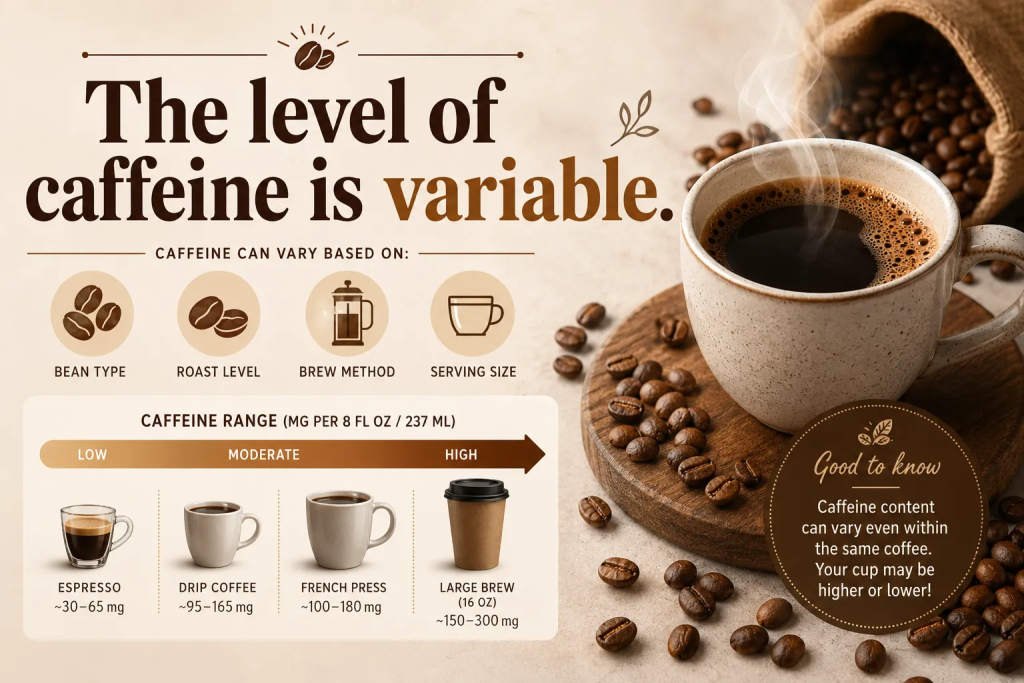
Not every coffee drink contains the same amount of caffeine. Here’s a quick comparison of the most common options. You can enjoy fresh coffee or tea in Hey Tea.
| Coffee Type | Serving Size | Average Caffeine |
|---|---|---|
| Brewed Coffee | 8 oz (240 ml) | 95 mg |
| Espresso | 1 oz (30 ml) | 63 mg |
| Double Espresso | 2 oz (60 ml) | 126 mg |
| Instant Coffee | 8 oz (240 ml) | 60 mg |
| Decaf Coffee | 8 oz (240 ml) | 2–7 mg |
Brewed Coffee
Brewed coffee is the most common type served at home and in many coffee shops. It is made by passing hot water through ground coffee beans using methods like drip machines, pour-over brewers, or a French press.
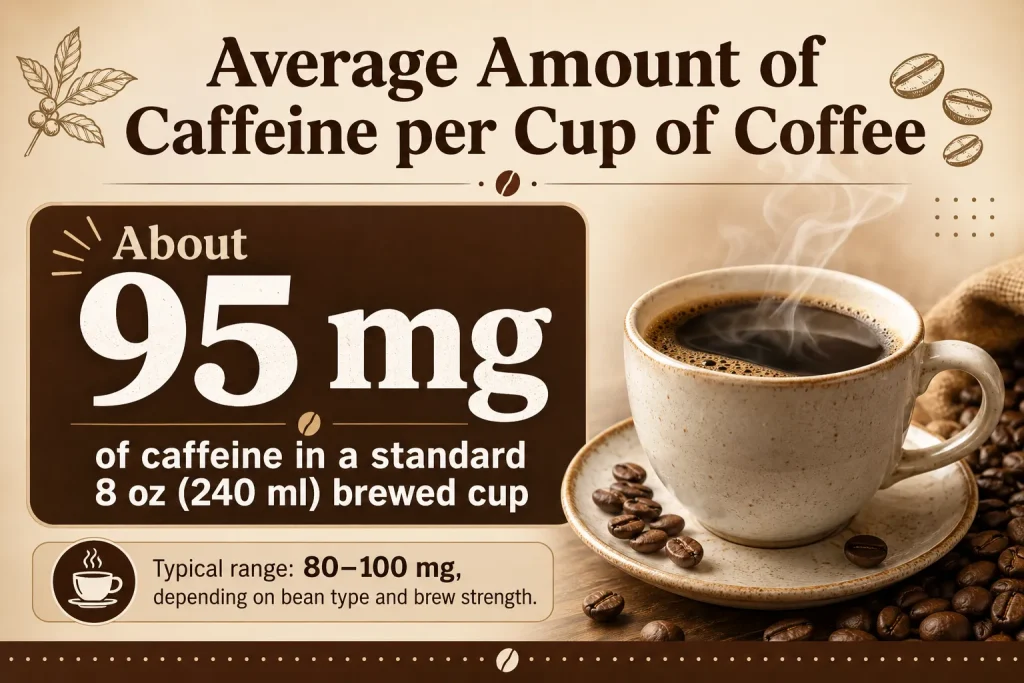
A standard cup usually contains 80 to 100 mg of caffeine, although some stronger brews may reach 140 mg. The longer the coffee grounds stay in contact with hot water, the more caffeine is generally extracted.
Espresso
Espresso is small in size but rich in flavor. A single shot is only about 1 ounce and contains around 63 mg of caffeine.
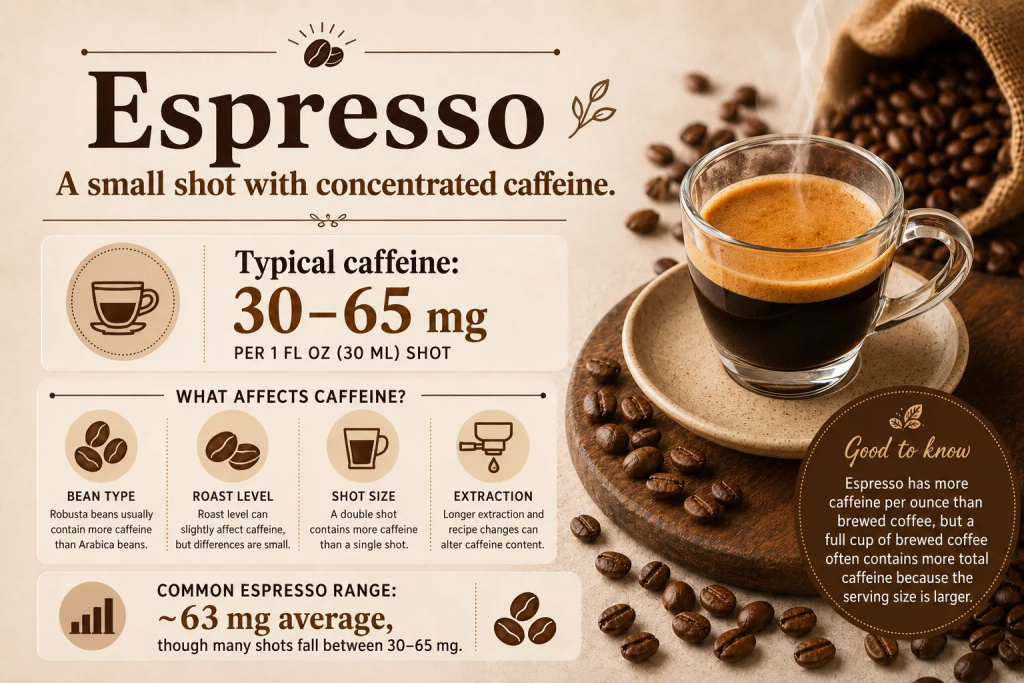
Many people believe espresso has more caffeine than brewed coffee. While espresso is more concentrated, a full cup of brewed coffee usually contains more total caffeine because the serving size is much larger.
Popular espresso-based drinks include:
- Latte
- Cappuccino
- Americano
- Flat White
The final caffeine content depends on whether the drink contains one, two, or more espresso shots.
Instant Coffee
Instant coffee is made from brewed coffee that has been dried into powder or granules. It is convenient and quick to prepare.
An average 8-ounce cup of instant coffee contains about 60 mg of caffeine. The exact amount varies between brands and depends on how much coffee powder you use.
Decaf Coffee
Decaffeinated coffee is often called “decaf,” but it is not completely caffeine-free.
Most 8-ounce cups contain 2 to 7 mg of caffeine. This small amount is much lower than regular coffee, making decaf a suitable option for people who want to reduce their caffeine intake without giving up the taste of coffee.
What Affects the Amount of Caffeine in Coffee?
Several factors influence how much caffeine ends up in your cup.
Coffee Bean Variety
The two main coffee bean varieties are Arabica and Robusta.
- Arabica beans have a smoother taste and naturally contain less caffeine.
- Robusta beans have a stronger, more bitter flavor and significantly more caffeine.
Many specialty coffees use mostly Arabica beans, while some blends include Robusta for extra strength.
Brewing Method
Different brewing methods extract caffeine at different rates.
For example:
- Drip coffee usually produces a balanced caffeine level.
- French press often extracts slightly more because the grounds remain in contact with the water longer.
- Espresso uses pressure to produce a concentrated shot in a short time.
Coffee Strength
Using more ground coffee increases the caffeine content. A stronger brew usually contains more caffeine than a lighter one, even if both cups are the same size.
Cup Size
Serving size makes a noticeable difference. While nutrition guides often use an 8-ounce cup as the standard, many mugs and coffee shop drinks hold 12, 16, or even 20 ounces. A larger serving naturally contains more caffeine.
Roast Level
Contrary to a common myth, light and dark roasted coffee contain similar amounts of caffeine. The roasting process changes flavor more than caffeine content.
Daily Caffeine Intake
For most healthy adults, experts generally recommend limiting caffeine intake to about 400 mg per day. That equals roughly four average cups of brewed coffee.
Some people process caffeine quickly and can drink coffee later in the day without problems. Others are much more sensitive and may experience:
- Trouble sleeping
- Increased heart rate
- Nervousness
- Restlessness
Knowing your own tolerance can help you decide how much coffee is right for you.
Final Thoughts
A standard 8-ounce cup of brewed coffee typically contains around 95 mg of caffeine, but the amount can range from 80 to 100 mg or more depending on the beans, brewing method, coffee strength, and serving size.
Espresso delivers about 63 mg per shot, instant coffee averages 60 mg per cup, and decaf still contains a small amount of caffeine. Understanding these differences makes it easier to choose the coffee that matches your taste and daily caffeine goals.